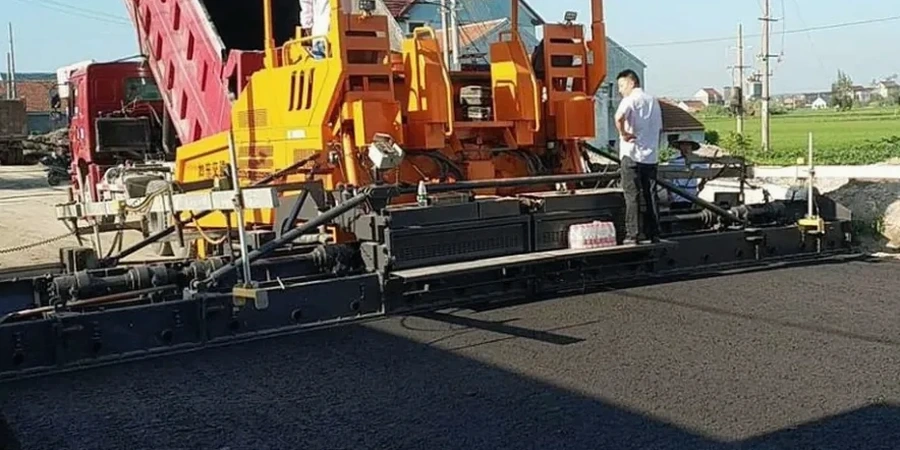
Tucson’s road network has expanded dramatically since the 1880s arrival of the Southern Pacific Railroad transformed a desert outpost into a grid city. That grid now sits atop some of the most challenging subgrade in the Southwest: expansive Caliche deposits, sandy arroyo washouts, and a diurnal temperature swing of 30°F that tears ordinary asphalt apart. When we design flexible pavement for a Tucson project—whether it’s a commercial parking lot off Oracle Road or a residential subdivision near the Tanque Verde Wash—we start with the subgrade. In our expertise, skipping the CBR test for road construction here is a guaranteed path to alligator cracking within two monsoon seasons. We also lean heavily on the test pit investigation to map the depth to Caliche, which can vary from 12 inches to 6 feet across a single job site.
Design the structural number for saturated conditions: a Tucson subgrade that tests at 12,000 psi resilient modulus in June can drop to 3,500 psi after one monsoon downpour.
Reference standards
AASHTO Guide for Design of Pavement Structures (1993), with ADOT supplemental calibration, ASTM D6926 / AASHTO T 245 (Marshall mix design, 75-blow compaction), ASTM D698 / AASHTO T 99 (Standard Proctor for subgrade and base compaction), ADOT Standard Specifications Section 303 (Aggregate Base) and Section 710 (Asphalt Concrete)
Quick answers
How much does a flexible pavement design cost for a typical Tucson commercial lot?
For a commercial parking lot or small subdivision road in Tucson, a complete flexible pavement design package—including subgrade investigation, CBR testing, HMA mix design, and the structural thickness report—typically ranges from US$1,480 to US$5,780. The final figure depends on the number of borings, the extent of laboratory testing, and whether the City of Tucson requires a geotechnical report as part of the permit submittal. We carry out a fixed-fee proposal before any fieldwork begins, so there are no surprises.
What pavement thickness does Tucson's climate require compared to cooler regions?
Thickness is driven by subgrade strength and traffic loading, not ambient temperature directly. However, Tucson's high heat demands a stiffer binder grade to prevent rutting, and the monsoon-driven moisture cycles require a thicker aggregate base than a drier climate would need. A typical residential street in Tucson might have 3 inches of HMA over 8 inches of aggregate base, while a commercial truck route could require 5 inches of HMA over 10 inches of base. The structural number calculation accounts for the local saturated subgrade condition, which is the controlling case here.
Do you use the AASHTO 1993 method or the newer Mechanistic-Empirical Pavement Design Guide?
Both, depending on the project scale and owner requirements. For most commercial and residential work in Tucson, the AASHTO 1993 method with ADOT calibration factors is still the standard and is accepted by the City of Tucson without question. For larger municipal projects or ADOT-funded work, we use AASHTOWare Pavement ME Design, which lets us model the specific Tucson climate file, hourly temperature distribution through the pavement layers, and the actual axle load spectra rather than an estimated ESAL count.