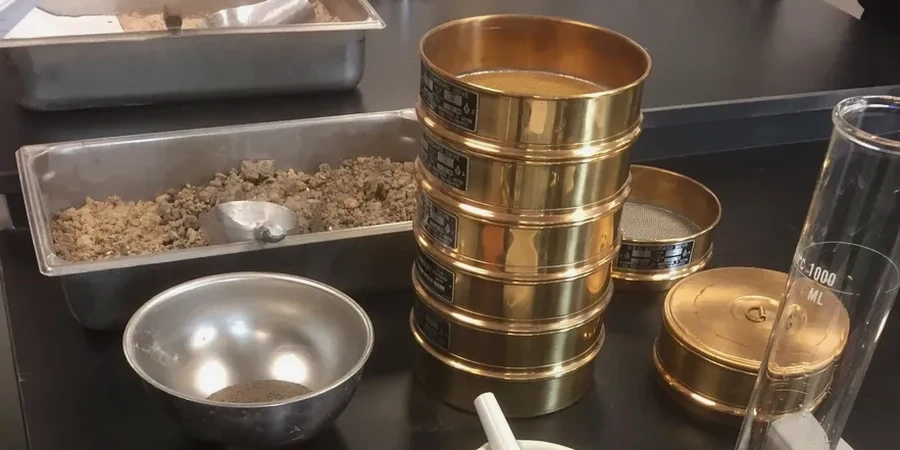
The most common mistake on Tucson jobsites is classifying basin soil by feel alone. A contractor digs a hole, rubs dirt between their fingers, and guesses it's sandy clay. Then the foundation specification is wrong. In a city where alluvial fans mix coarse Catalina foothill sediment with fine playa silts, the gap between visual estimate and actual gradation can be dramatic. A full grain size analysis combining mechanical sieving for the coarse fraction with hydrometer sedimentation for fines removes the guesswork. We run the procedure per ASTM D422 and classify the material per ASTM D2487. The report tells you exactly what you are building on, whether you are placing a mat foundation near Davis-Monthan or excavating for a retaining wall in the Sam Hughes neighborhood.
Gradation controls drainage, compaction, and frost behavior. In Tucson's arid basins, a 5% shift in fines content changes the Unified Soil Classification completely.
Quick answers
How much sample material do you need for a grain size analysis?
For soils with no gravel, about 500 grams of dry material is sufficient. If gravel is present, we need up to 5 kg to ensure a representative split. The sample must be oven-dried, and we prefer to receive it in a sealed bag to preserve in-situ moisture if we are also running water content.
What is the turnaround time for a sieve and hydrometer test in Tucson?
Standard turnaround is three to four business days. The hydrometer portion requires timed readings over a 24-hour period, which sets the minimum lab time. Expedited two-day service is available when project schedules require it.
How much does a grain size analysis cost?
A combined sieve and hydrometer analysis typically runs between US$110 and US$190, depending on the number of samples and whether we are also performing Atterberg limits or other index tests on the same material.
Why can't I just use a simple sieve test without the hydrometer?
A sieve-only test stops at the No. 200 sieve and tells you the percentage of fines, but nothing about whether those fines are silt or clay. Silt and clay behave completely differently in terms of permeability, frost susceptibility, and shrink-swell potential. In Tucson's expansive clay zones, the hydrometer fraction is the only way to quantify the clay content that drives heave.